Canine Rehabilitation: Helping Dogs Recover, Move Better and Stay Active
Has your dog started slowing down, struggling to get up after a rest or finding their usual walks more difficult? Perhaps they are recovering from surgery or an injury and need help rebuilding their strength. Canine rehabilitation could make a real difference to their mobility, comfort and quality of life.
At Jersey Road Veterinary Hospital, we are pleased to introduce our new Canine Rehabilitation service, designed to help dogs recover from injuries and surgery, manage ongoing musculoskeletal conditions and maintain mobility as they age.
Just like humans, dogs can experience joint pain, muscle weakness, stiffness and reduced mobility. These problems can affect their ability to enjoy everyday activities, from climbing stairs and jumping into the car to going for walks and playing.
With an individually tailored rehabilitation programme, many dogs can improve their strength, movement and confidence, helping them remain active and comfortable for longer.
What Is Canine Rehabilitation?
Canine rehabilitation is a structured programme of therapeutic exercises and controlled movements designed to improve a dog’s physical function. Similar in principle to physiotherapy for humans, veterinary rehabilitation focuses on improving:
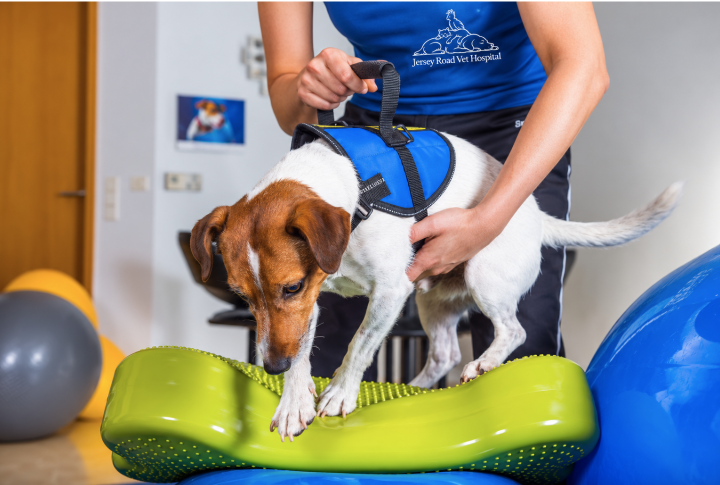
Balance and coordination exercises can help dogs develop stability and confidence.
- Muscle strength: Rebuilding and maintaining the muscles that support joints and movement.
- Mobility and flexibility: Helping dogs move more comfortably and maintain their range of motion.
- Balance and coordination: Improving stability and confidence when walking or navigating obstacles.
- Recovery after surgery or injury: Supporting a gradual, controlled return to normal activities.
- Long-term joint health: Helping dogs with chronic conditions maintain their physical function and quality of life.
Rehabilitation programmes are tailored to each dog’s age, condition, physical abilities and recovery goals. Importantly, canine rehabilitation is not just for dogs recovering from surgery. It can also play a valuable role in managing chronic conditions and helping senior dogs stay mobile.
What Conditions Can Canine Rehabilitation Help?
Canine rehabilitation may benefit dogs experiencing a range of orthopaedic, muscular and mobility-related problems.
1. Arthritis and Joint Stiffness
Arthritis is a common cause of pain and reduced mobility in dogs, particularly as they get older. Dogs with arthritis may become reluctant to exercise, struggle to get up after resting or have difficulty climbing stairs. While arthritis cannot be cured, an appropriate rehabilitation programme can help maintain muscle strength, support affected joints and improve mobility. Rehabilitation may form part of a broader arthritis management plan, alongside veterinary treatment, weight management and appropriate exercise.
2. Cruciate Ligament Injuries and Surgery
Cruciate ligament injuries are a common cause of hindlimb lameness in dogs. Following cruciate ligament surgery, rehabilitation can be an important part of recovery, helping dogs gradually rebuild muscle strength, improve joint stability and return to normal activities. A carefully managed exercise programme also helps owners understand how much activity is appropriate during different stages of recovery.
3. Recovery Following Orthopaedic Surgery
Dogs recovering from orthopaedic procedures often experience temporary muscle weakness, stiffness and reduced mobility. Rehabilitation provides a structured approach to rebuilding strength and movement while respecting the healing process. Exercises are introduced and progressed according to the dog’s condition and veterinary recommendations.
4. Back Pain and Spinal Conditions
Dogs experiencing back discomfort or certain spinal conditions may benefit from carefully selected rehabilitation exercises. Depending on the underlying condition, rehabilitation may help improve controlled movement, muscle strength and stability. However, not all spinal conditions are suitable for rehabilitation, particularly during acute stages. A veterinary assessment is essential before commencing any exercise programme.
5. Patella Luxation (Slipping Kneecaps)
Patella luxation occurs when a dog’s kneecap moves out of its normal position. It can cause intermittent lameness, discomfort or an unusual skipping movement when walking. For suitable dogs, rehabilitation may help strengthen the muscles supporting the affected joint and improve stability as part of an overall veterinary treatment plan.
6. Muscle Weakness, Lameness and Reduced Mobility
Dogs may experience muscle weakness following injury, surgery or periods of reduced activity. A rehabilitation programme can help rebuild strength, improve balance and support a gradual return to normal movement.
Canine Rehabilitation for Senior Dogs
One of the most valuable applications of canine rehabilitation is helping older dogs maintain their mobility and independence. As dogs age, they can gradually lose muscle mass and strength. Arthritis and other musculoskeletal conditions may also make everyday movements more difficult.
Because these changes often develop slowly, owners may assume their dog is simply getting older. However, reduced activity, stiffness and difficulty moving can be signs of discomfort or an underlying condition that warrants veterinary attention.
Signs Your Senior Dog May Need Help
- Difficulty getting up after lying down.
- Stiffness, particularly after resting.
- Reluctance to climb stairs or jump into the car.
- Slowing down or tiring more quickly on walks.
- Reduced interest in playing or exercising.
- Changes in posture, gait or the way they walk.
- Difficulty maintaining balance or slipping on smooth floors.
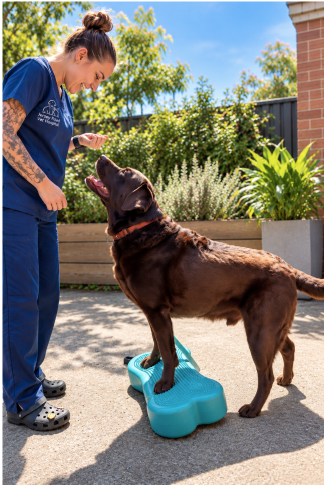
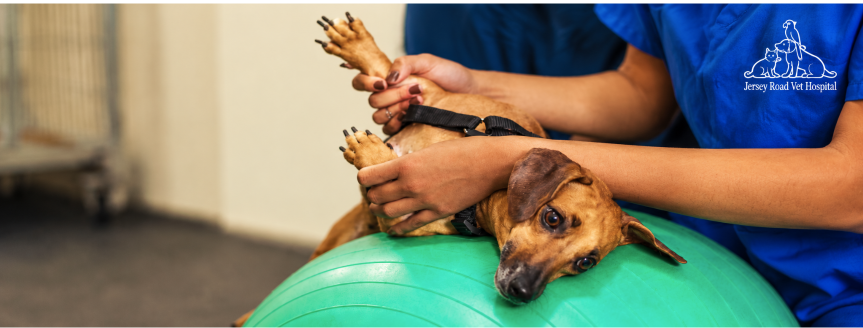
Freddy works on strength and balance with Giullia during a rehabilitation session.
How Does Canine Rehabilitation Work at Jersey Road Vets?
Our new rehabilitation service combines veterinary assessment with practical, individualised exercise guidance from our trained veterinary nursing team. The focus is on developing a safe, manageable programme that owners can incorporate into their dog’s daily routine at home.
Step 1: Initial Veterinary Assessment
Your dog will first attend a consultation with one of our veterinarians. During this appointment, we assess their mobility, review any relevant medical or surgical history and identify areas of concern. This may include observing how your dog walks through a gait assessment. Our veterinarian will determine whether rehabilitation is appropriate and help establish suitable recovery or mobility goals.
Step 2: Individual Rehabilitation Appointment
Following the veterinary assessment, our team will develop a rehabilitation programme tailored to your dog’s needs. You will then attend an appointment with Giullia, our trained veterinary nurse, who will guide you through the recommended exercises. These exercises are selected according to your dog’s condition, physical ability and rehabilitation goals.
Step 3: Your Dog’s Home Exercise Programme
A key part of successful rehabilitation is consistency. You will receive practical guidance on performing your dog’s exercises at home, including appropriate technique, frequency and progression. The aim is to make rehabilitation manageable for owners while ensuring exercises are performed safely. Follow-up appointments may be recommended to monitor progress and adjust the programme as your dog’s strength and mobility improve.
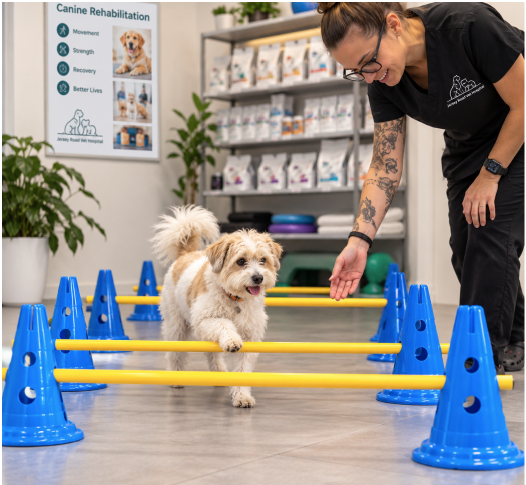
Giullia guides Teddy through controlled pole exercises to support mobility and coordination.
Meet Our Canine Rehabilitation Team
We have invested in additional training to introduce this service at Jersey Road Veterinary Hospital.
Dr Newsome completed a Practical Rehabilitation Training Course in Perth earlier this year, developing additional skills and knowledge to support canine rehabilitation as part of veterinary care.
Giullia, Veterinary Nurse, has completed a Certificate in Canine Rehabilitation for Nurses and Technicians, providing specialised training in rehabilitation exercises and techniques.
Together, our veterinary and nursing team will work with you to develop an appropriate programme for your dog’s individual needs.
Frequently Asked Questions About Canine Rehabilitation
Is canine rehabilitation only for older dogs?
No. Dogs of all ages may benefit from rehabilitation, depending on their condition. Younger dogs recovering from injury or surgery may benefit just as much as older dogs experiencing arthritis or reduced mobility.
Can rehabilitation help a dog with arthritis?
Yes. For suitable dogs, rehabilitation can be a useful part of an arthritis management programme, helping maintain muscle strength, joint support and mobility.
Can I do rehabilitation exercises with my dog at home?
Yes. Our service is designed to provide owners with practical exercises they can safely incorporate into their dog’s daily routine. However, exercises should only be undertaken following veterinary assessment and appropriate instruction.
How long will my dog need rehabilitation?
This depends on your dog’s condition, age and recovery goals. Some dogs may benefit from a shorter programme following surgery, while those with chronic conditions may require ongoing management.
Helping Your Dog Get Back on Their Feet
Whether your dog is recovering from surgery, experiencing arthritis or back discomfort, or simply becoming less mobile as they age, canine rehabilitation may help them move more comfortably and enjoy a better quality of life.
You don’t need to wait until your dog is struggling to walk before seeking advice. Early assessment of changes in mobility can help identify problems and determine the most appropriate treatment.
Book a Canine Rehabilitation Assessment at Jersey Road Vets
Is your dog slowing down, recovering from surgery or showing signs of stiffness or discomfort?
Our team at Jersey Road Veterinary Hospital can assess your dog’s mobility and advise whether our new Canine Rehabilitation service may be suitable.
Contact Jersey Road Veterinary Hospital today to book an initial veterinary assessment and find out how we can help your dog stay active, strong and comfortable.